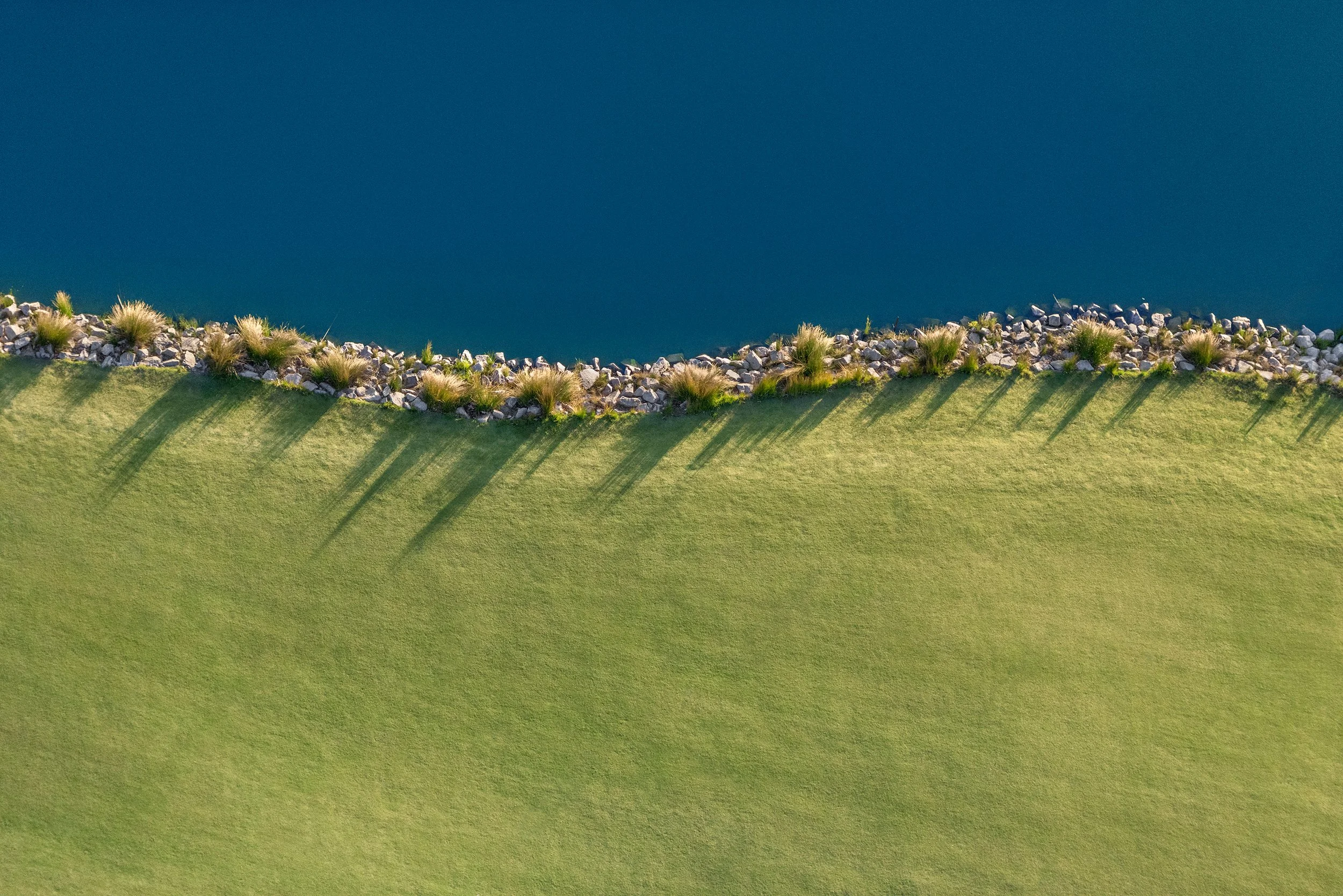
Zoe Wetherall, “Golf Green” 40”x60” color photograph VIEW ADDITIONAL IMAGES FROM LINES OF NATURE SERIES >>>
“No Horizon”
May 22nd- July 19th, 2026
OPENING RECEPTION: MAY 30th 4-6PM
featuring the works of Sasha Bezzubov, Phil Buehler, Chris Coffin, Stephen Mallon, Linda Griggs, Patricia Smith, Shira Toren, Kathleen Vance, and Zoe Wetherall
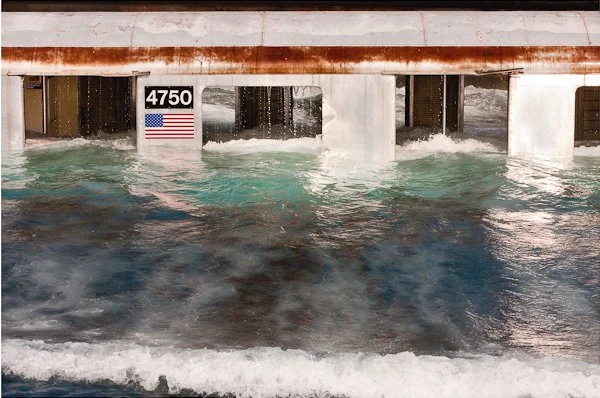
Stephen Mallon, “Pool” 40”x60” c print photograph, edition of 5
VIEW ADDITIONAL IMAGES FROM NEXT STOP ATLANTIC SERIES >>>
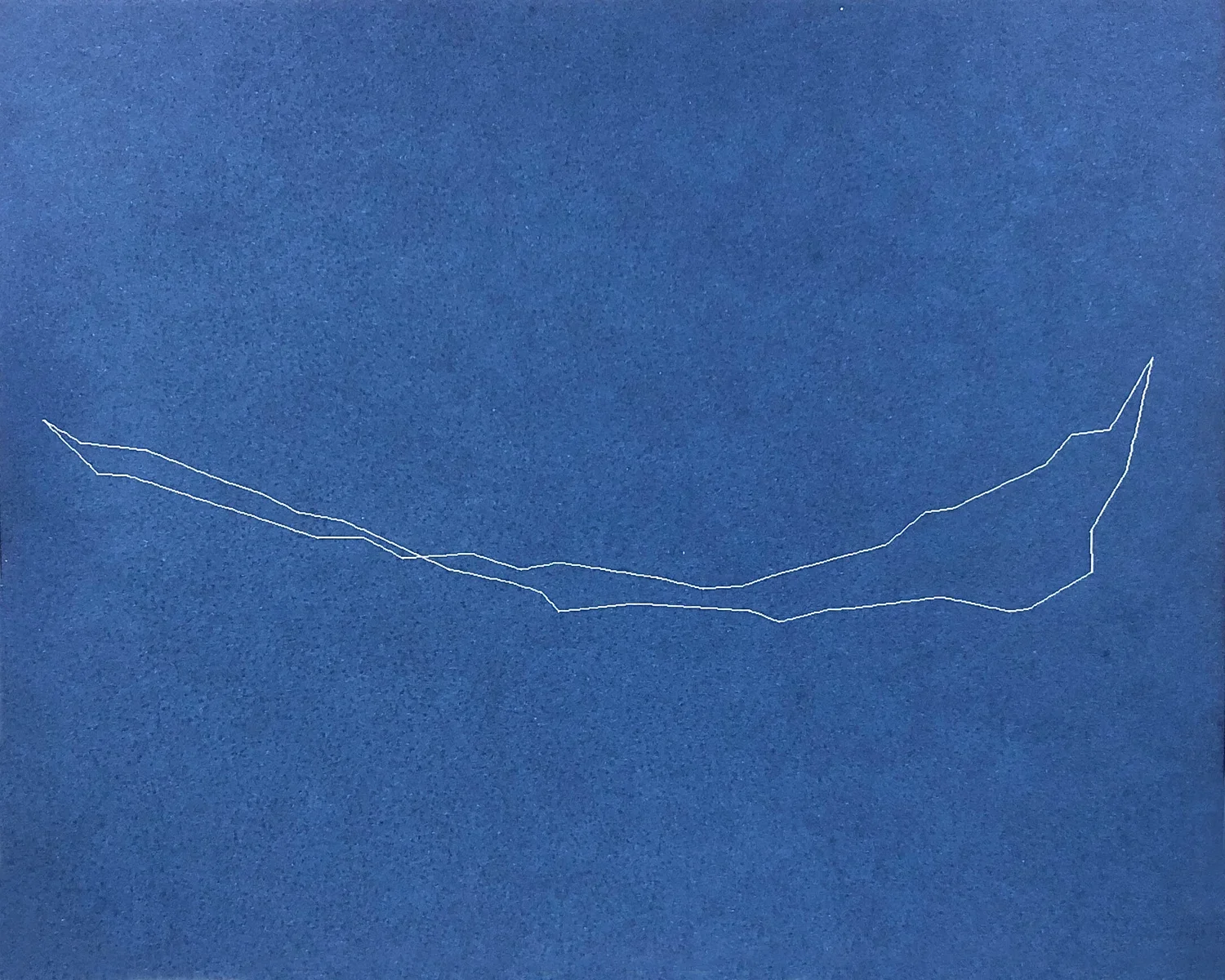
Chris Coffin, “"2.2 mi swim to Sherwood Island and Back, CT" 2021, 8x10” cyanotype, satellites, GPS, performance
VIEW ADDITIONAL IMAGES FROM WATER DRAWING SERIES >>>
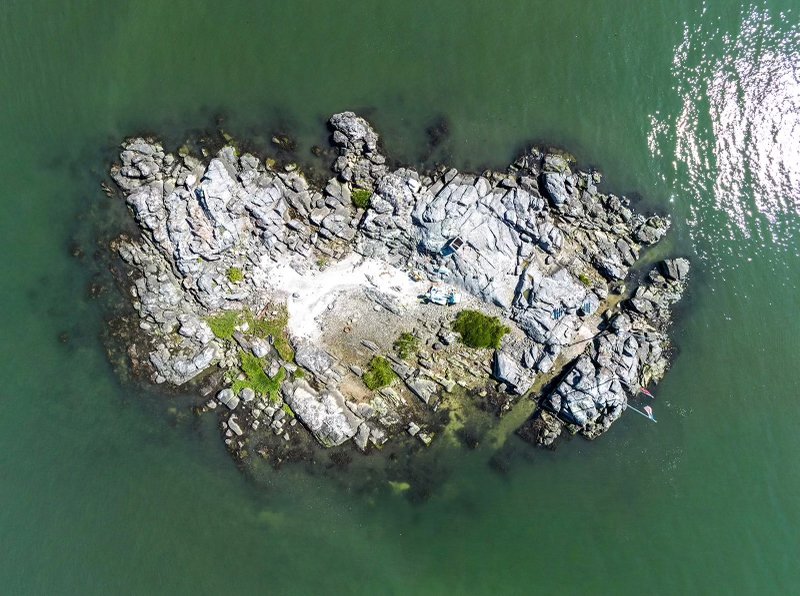
Phil Buehler, “Rat Island” color photograph,
VIEW ADDITIONAL IMAGES FROM ISLAND OF NEW YORK SERIES >>>
The Front Room is proud to present No Horizon, a group exhibition exploring water through unexpected perspectives and uncommon modes of seeing. Featuring works by Sasha Bezzubov, Phil Buehler, Chris Coffin, Stephen Mallon, Linda Griggs, Patricia Smith, Shira Toren, Kathleen Vance, and Zoe Wetherall, the exhibition considers water not as backdrop or symbol alone, but as material, atmosphere, memory, and force.
Blue is consistently ranked among the world’s favorite colors across cultures and demographics. Likewise, studies of popular taste in art have repeatedly shown a preference for landscapes featuring water stretching toward a distant horizon line; images that promise calm, transcendence, and escape. No Horizon begins where that familiar image dissolves.
The artists in No Horizon interrupt and complicate conventional expectations of water imagery. Here, horizons disappear, scale becomes uncertain, and water emerges as both subject and destabilizing presence. The exhibition moves beneath surfaces and beyond postcard views, examining water as infrastructure, abstraction, erosion, reflection, containment, and transformation.
Across photography, painting, sculpture, and mixed media, the works in No Horizon challenge viewers to reconsider one of art history’s most enduring motifs. Water becomes fragmented, obscured, industrialized, intimate, or uncanny - at times meditative, at times threatening. In refusing the comfort of the distant horizon, the exhibition asks what remains when orientation itself is unsettled.
At a moment marked by rising seas, ecological instability, and renewed attention to humanity’s relationship with the natural world, No Horizon offers a timely meditation on perception, environment, and the limits of representation.
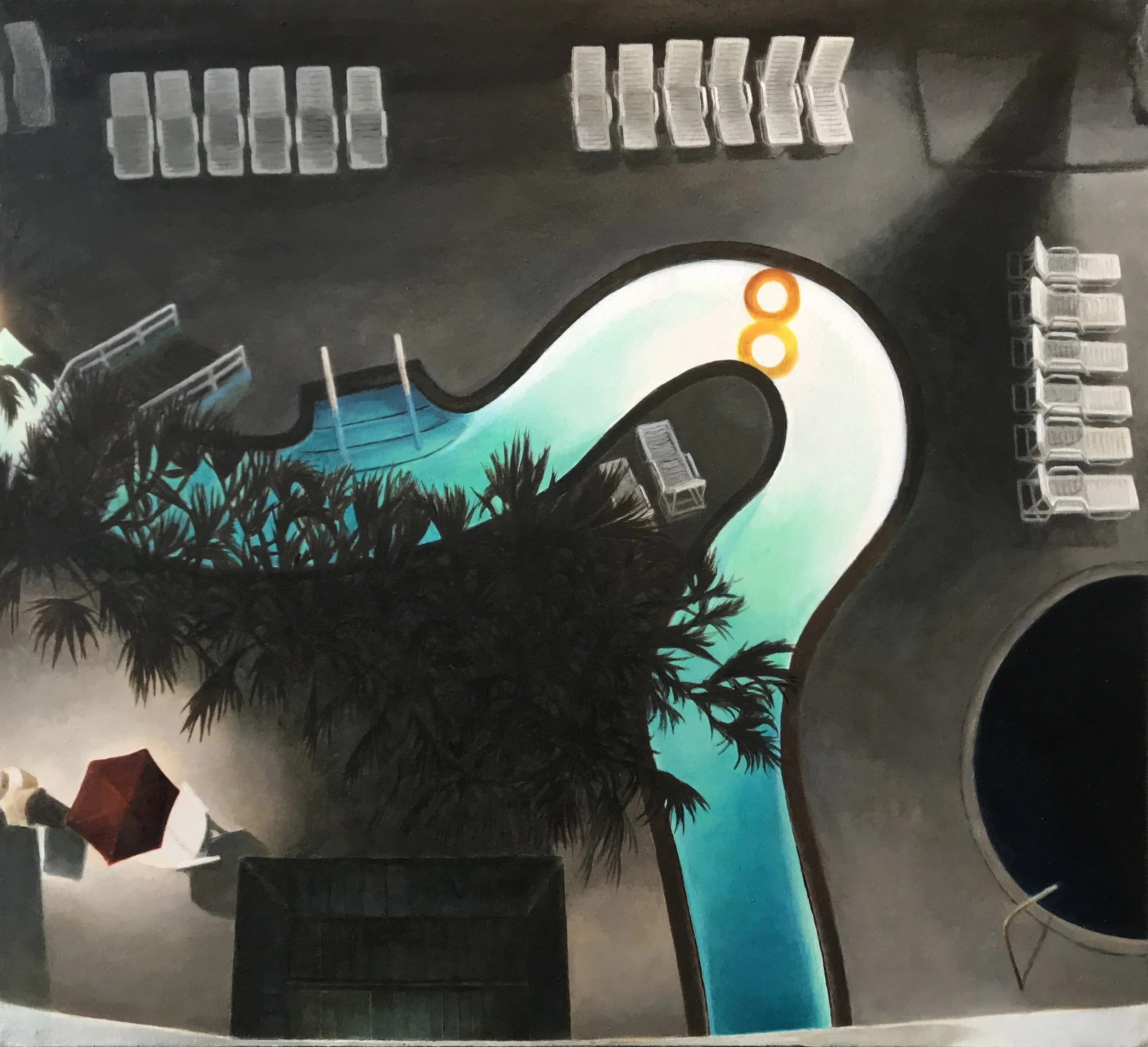
Linda Griggs, “Lazy Night” 20”x22” oil on canvas with selective varnish view
VIEW ADDITIONAL IMAGES FROM COMFORT AND LOSS SERIES >>>
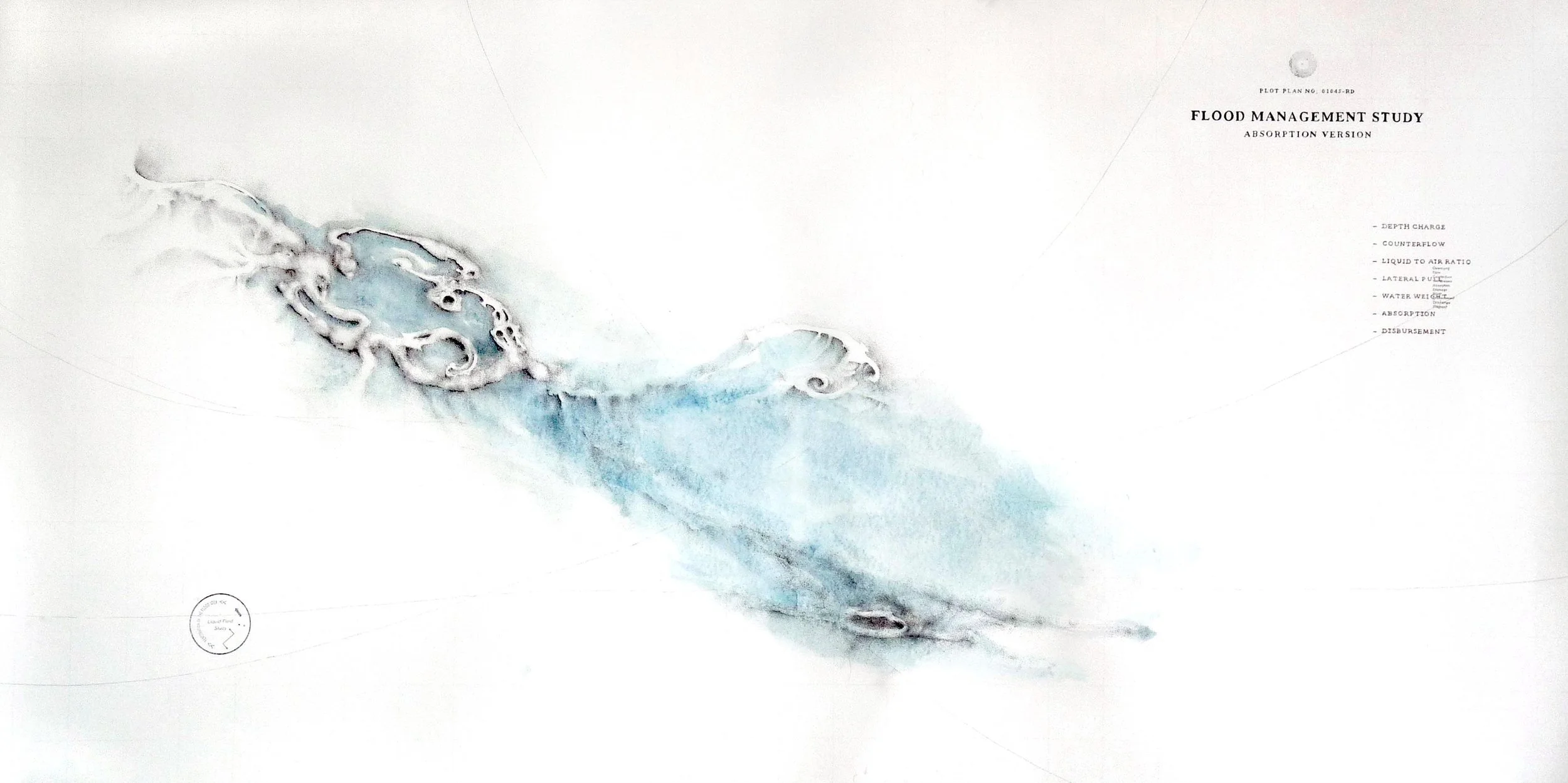
Patricia Smith, “Flood Management Study, Absorption Version” ink, graphite, watercolor on paper, 30”x60” 2014
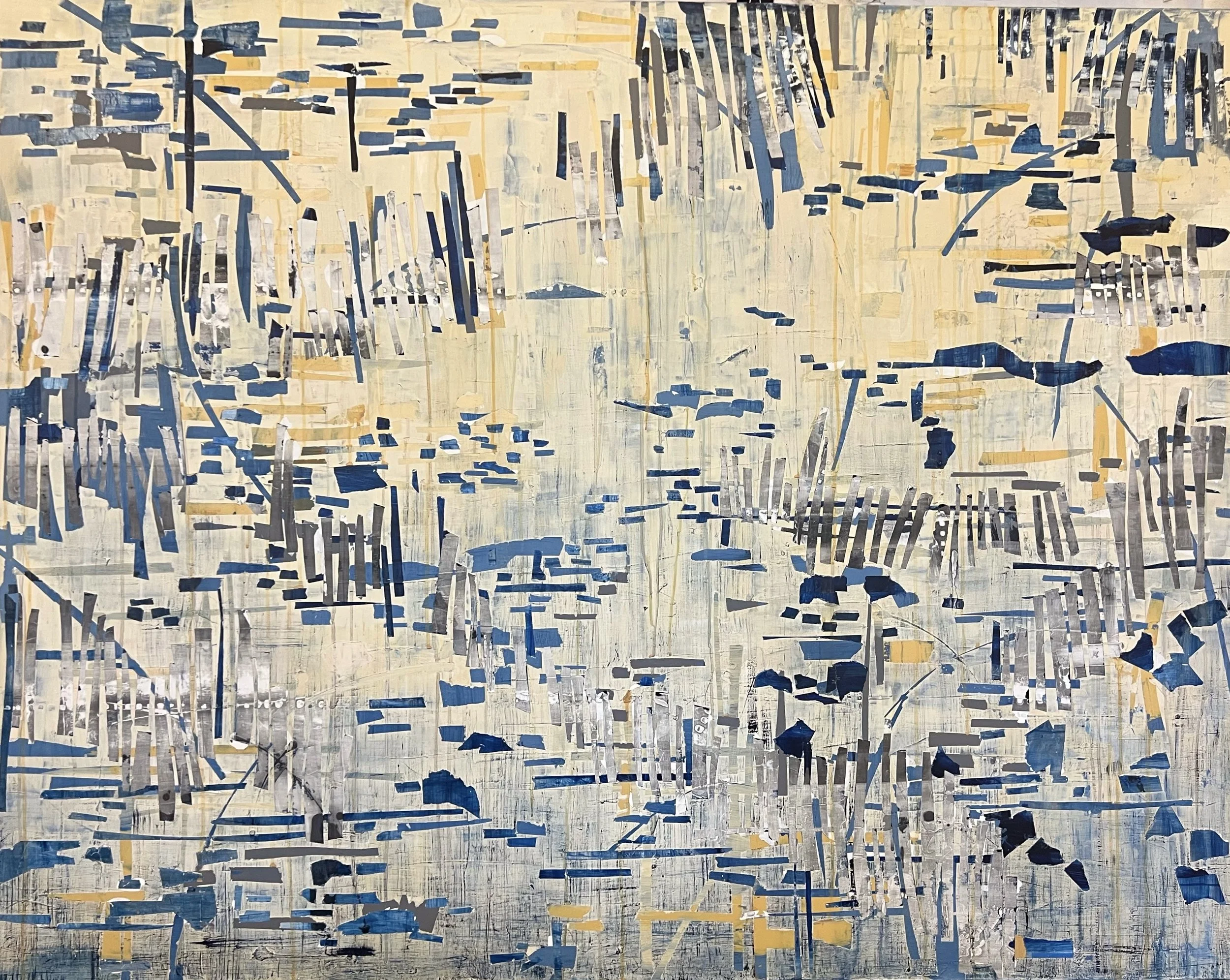
Shira Toren, “Mapping the Shallows” Venetian plaster, pigment on canvas, 48”x60” $8500
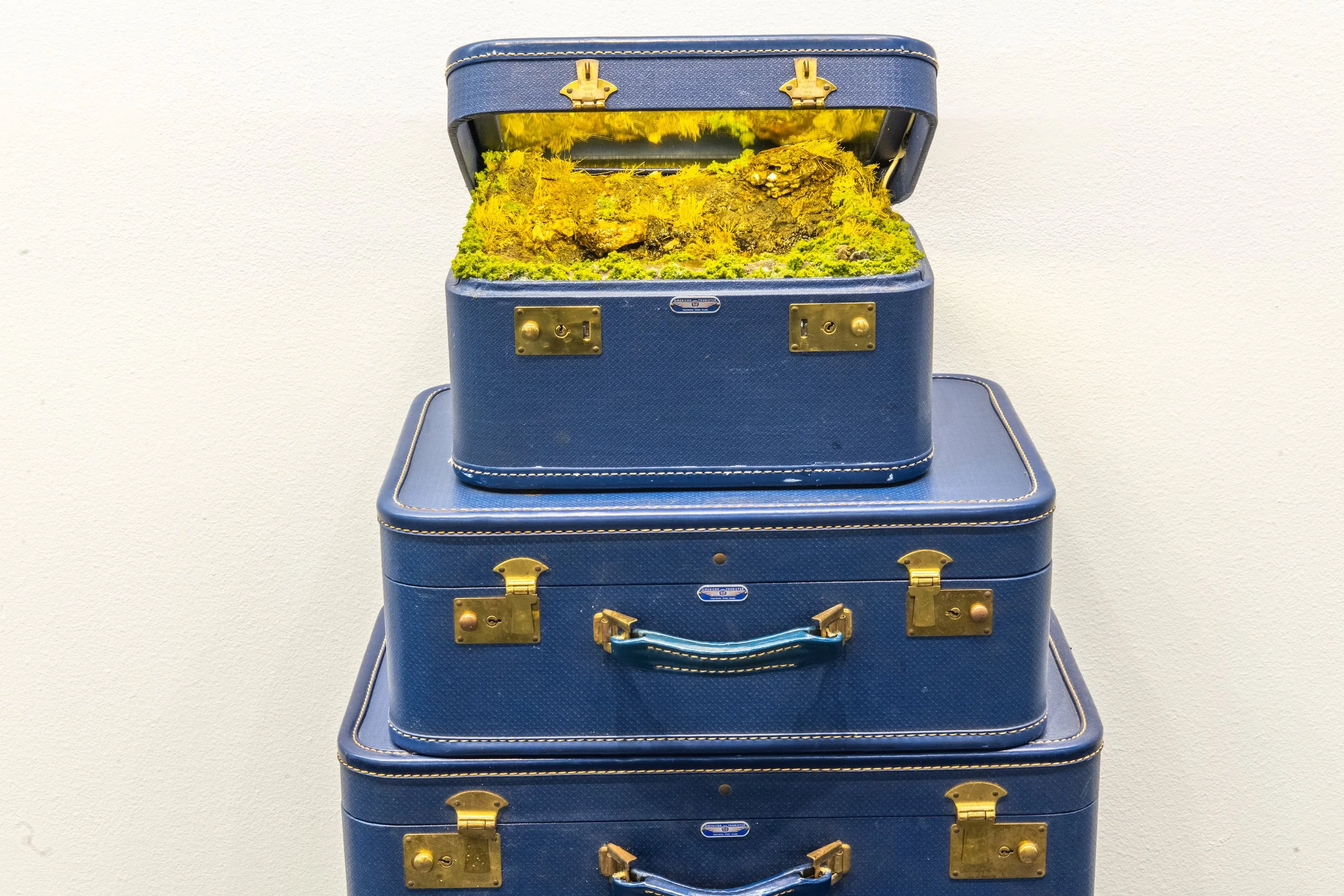
Kathleen Vance, “Traveling Landscape- Blue Stack” vintage luggage, resin, soil, , artificial foliage, water, 39"x29"x17" $8,500
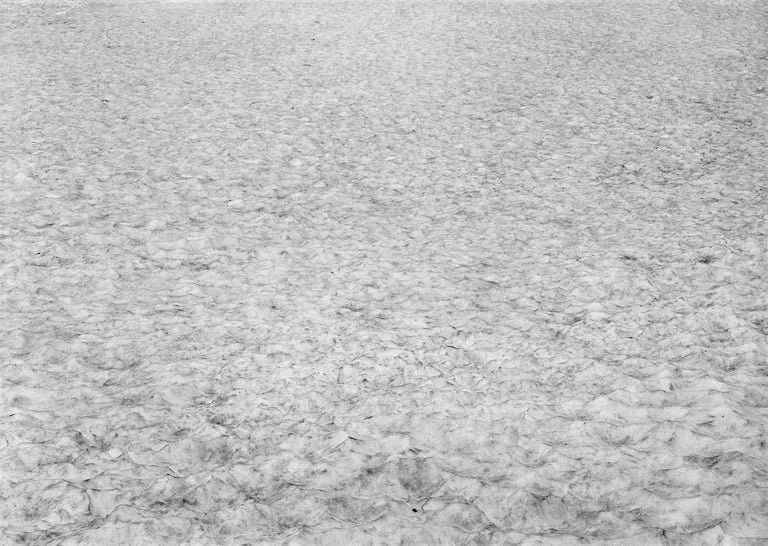
Sasha Bezzubov, “Ice 32 Minimalist Landscape” black and white photograph
VIEW ADDITIONAL IMAGES FROM ALBEDO ZONE SERIES>>>
Front Room Gallery
205 Warren Street
Hudson, NY 12534
Open Friday- Sunday and by appointment
for inquiries email info@frontroom.org
Sasha Bezzubov has long been a vital figure within the Front Room Gallery contemporary photography program, creating powerful, large-scale imagery that occupies the critical intersection of documentary photography, human labor, and ecological crisis. Born in Kyiv and holding an MFA from the Yale University School of Art, Bezzubov approaches the landscape not merely as a scenic backdrop, but as a site of profound political, socioeconomic, and environmental tension. His practice balances the sublime grandeur of the natural world with a sharp, empathetic lens focused on the realities of global tourism, migration, and corporate exploitation.
Throughout his extensive exhibition history with Front Room Gallery, Bezzubov has debuted major bodies of work that capture localized realities reflecting global issues:
The Architecture of Disaster: In early critically acclaimed projects like Wildfire(published as a monograph by Nazraeli Press with an introduction by environmentalist Bill McKibben), Bezzubov documented the eerie, scorched aftermath of forest fires. These images captured the fragile boundaries between human civilization and uncontrollable ecological shifts.
Conceptual Landscapes of Climate Change: In his minimalist series Albedo Zone, Bezzubov utilizes conceptual framework methods to visualize the invisible threat of global warming. The project features horizonless, monotone expanses juxtaposing dark ocean water and light Arctic ice. By naming the series after the scientific measure of a surface's reflectivity, Bezzubov transforms seemingly serene, abstract compositions into a stark warning about the accelerating loss of the planet's solar shield.
The Post-Colonial Landscape: For his evocative solo exhibition Republic of Dust, Bezzubov traveled to Gabon, Central Africa. The resulting large-scale archival pigment prints examined the physical realities of the region, stripping away idealized tropes to reveal the complex daily textures of life, labor, and changing local economies.
The Sublime and Subservient Labor: His ambitious series On Everest highlights the hidden infrastructure supporting Himalayan tourism. Spanning nearly a decade of documentation, these massive photographs juxtapose the daunting scale of the mountain terrain with the profound physical burdens borne by commercial porters. By centering his camera on these workers, Bezzubov successfully transforms classic landscape awe into acute ethical awareness.
Bezzubov is a highly decorated artist and a two-time recipient of the prestigious Fulbright Scholarship Award. Alongside his singular practice, he has also engaged in long-term collaborative projects, such as The Searchers and Facts on the Ground, with photographer Jessica Sucher, drawing high praise from foundational art critics like Lucy Lippard. His photographs reside in the permanent collections of elite cultural institutions, including the Metropolitan Museum of Art and the Museum of the City of New York. Widely reviewed in publications like The New Yorker, Frieze, and The New York Times, Bezzubov continues to challenge how contemporary photography exposes power, displacement, and environmental truth.
Phil Buehler is a foundational figure within the Front Room Gallery photography roster, celebrated for his lifelong dedication to documenting what he aptly terms "modern ruins". Holding a BA from Rutgers University and an MFA from the School of Visual Arts, Buehler has spent over fifty years exploring, researching, and photographing obsolete architecture, neglected landscapes, and forgotten historical sites. Rather than capturing mere destruction, his large-scale, immersive photographs rescue the human stories embedded within these abandoned spaces, transforming historical decay into powerful, nostalgic visual poetry.
Throughout his long exhibition history with Front Room Gallery, Buehler has presented deeply researched solo exhibitions that bridge the gap between historic documentation and contemporary art:
No Man Is an Island: In this far-reaching series, Buehler utilizes boats and drones to photograph the historic, yet frequently forgotten islands surrounding New York City. From the overgrown ruins of Renwick Castle on Roosevelt Island to obscure patches of land like Rat Island, these images explore the concept of the New York archipelago as a repository for forgotten history, containment, and isolation.
Mallrat to Snapchat: Debuting on Black Friday, this critically acclaimed exhibition documented the skeletal remains of the defunct Wayne Hills Mall in New Jersey. Subtitled The End of the Third Place, the series served as a poignant elegy for the dying culture of middle-class suburban retail and the vanishing social spaces of American youth. The installation was notably accompanied by physical record bins filled with vinyl LPs from 1973—the year the mall opened and the year Buehler began taking photos.
Woody Guthrie’s Wardy Forty: This award-winning body of work and monograph meticulously documented the abandoned Greystone Park Psychiatric Hospital, where the legendary folk singer Woody Guthrie spent years battling Huntington’s disease. Buehler brilliantly juxtaposed stark photographs of the crumbling asylum architecture with Guthrie's personal medical records, writings, and intimate interviews.
Buehler's practice frequently expands beyond traditional frames into massive public installations, including a 60-foot banner documenting the impact of the war in Ukraine and his monumental public art walls in Brooklyn. His photographs have earned widespread critical acclaim and have been covered by premier cultural and media institutions, including The New York Times, Art in America, Art News, The Wall Street Journal, Hyperallergic, The Guardian, and PBS. By training his camera on the artifacts our society leaves behind, Phil Buehler continues to challenge how we preserve history, memory, and community.
VIEW AVAILABLE WORKS BY CHRIS COFFIN
Chris Coffin is a compelling voice within the contemporary landscape, creating a multi-layered body of work that sits at the dynamic intersection of performance art, alternative photography, sculpture, and mapping. Drawing heavily from his decades of experience as an Ocean Lifeguard Officer, Coffin’s work is deeply inspired by his lifelong connection to the ocean. He treats the shoreline not as a static landscape, but as a site of rigorous somatic inquiry, using nautical navigation, exploration, and alternative processes to track human interaction with volatile aquatic environments.
Coffin’s most profound projects function as endurance-based records of physical space, translated into evocative gallery installations through several distinct approaches:
Endurance Performances and Water Drawings: In order for Coffin to map a coastal environment, he must first physically submerge himself in it—experiencing the stretch of water by swimming, surfing, or paddle boarding. In performance projects like Fisher’s Island Crossing, he paddled a 7.2-mile round trip between Connecticut and New York, utilizing modern satellite tracking, cartography, and physical endurance mark-making to record his bodily movement across the water’s surface.
The Cyano Maps: The data and physical trajectories gathered during his ocean swims are translated into stunning alternative photographic works, notably his Cyano Mapsand Rocks and Stones series. Using sunlight and ocean water to develop intricate cyanotype prints on heavy Arches paper, these striking monochromatic blue compositions offer a bird's-eye view of his pathways, blending scientific data with deeply personal, autobiographical geography.
Offshore Pop-Up Interventions: Coffin frequently challenges the conventional constraints of traditional art spaces by taking his practice directly to the sea. For his conceptual project Swim to the Light, Coffin swam 1.5 miles offshore to the historic Penfield Reef Lighthouse in Fairfield, Connecticut, commandeering the structure to mount a temporary, DIY pop-up exhibition meant exclusively for those intrepid enough to navigate the water to view it.
Coffin is a highly respected art educator and has been recognized as an Edward Albee Foundation Fellow. His conceptual installations, films, and photographic maps have been featured at specialized coastal spaces like the Alexey von Schlippe Gallery at UCONN Avery Point and the Jamestown Arts Center. His multi-media practice has been celebrated and reviewed in prominent publications including The New York Times, Long Island Newsday, and The New Haven Independent. By treating his own body as a cartographic tool, Chris Coffin continues to collapse the boundaries between human experience and the elemental forces of nature.
Linda Griggs brings a distinct, compelling voice to the Front Room Gallery artist roster, following her highly successful debut solo exhibition with the gallery last year. Born in Oklahoma and holding a degree from Hunter College, Griggs is celebrated for her deeply resonant, narrative-driven oil paintings that bridge the gap between traditional realism and conceptual storytelling. Her meticulous, representational style lures viewers in with seemingly familiar images, only to layer them with darkly humorous text, unexpected historical references, and complex socio-political critiques. Drawing heavily from the rich verbal traditions of the American South and West, Griggs acts as a visual chronicler of the unknown stories of everyday people—examining class, gender politics, community, and memory.
Her recent exhibition perfectly demonstrated her sharp narrative focus and her unique, thoughtful approach to composition:
The Psychology of the Pool: At the heart of her featured works is a poignant, romantic exploration of shared domestic spaces. Shunning opulent infinity pools, her meticulously detailed paintings focus instead on backyard pools, motel complexes, and notably, empty community pools. By contrasting muted, monochromatic backgrounds with vibrant, saturated blues—or capturing the raw, weathered concrete of a drained public basin—her imagery transforms ordinary mid-century leisure spots into striking, introspective meditations on suburban ennui, vanishing American sanctuaries, and community history.
Story Art and Narrative Still Lifes: Across her broader practice, Griggs challenges human expectation by occasionally painting textual narratives directly onto her panels. She frequently adapts the formal language, dramatic lighting, and spatial layouts of classic Dutch Master still lifes to construct witty, visual puns. These compositions layer everyday objects with modern commentary on aging, memory, and death, proving that the most profound histories can be found hidden within simple, domestic arrangements.
Material Depth and Light: Griggs elevates her narrative scenes through a precise and intentional use of materials on the canvas. By integrating subtle variations in surface texture, such as selective varnishing on specific elements like water or plastic toys, she dynamically changes how light reflects off the canvas. This forces the viewer to physically shift their position in front of the painting to fully experience its shifting technical and emotional depths.
Griggs is a highly decorated artist whose career has been punctuated by fellowships at the prestigious MacDowell and Millay colonies. Her works have been exhibited internationally and nationwide at venues such as the Iwami Art Museum in Japan, the Wustum Museum, the New York Public Library, and the Clemente Center. Widely reviewed and praised by major regional and national art critics in publications like The New York Times, Chronogram, and Artforum, Linda Griggs continues to challenge contemporary painting by proving that a single, beautifully frozen frame can tell a sprawling, unforgettable story.
Patricia Smith has been a cornerstone of the Front Room Gallery artist roster since 2006, utilizing her meticulous drawing practice to trace the invisible boundaries between physical spaces and human emotion. Working primarily in ink, watercolor, and colored pencil, Smith creates complex "psychic maps" that transform geographical landscapes, architecture, and celestial patterns into poetic spatial narratives. Whether plotting the coordinates of a historic village in the Hudson Valley or rendering the interior psychology of isolation, her labor-intensive works on paper invite viewers to discover what hides in the margins of everyday life.
Over the course of her decades-long relationship with Front Room Gallery, Smith has presented numerous notable solo exhibitions that highlight her evolving exploration of space and containment:
The Mapping of Memory: Early shows like City of One and Mapper established her unique voice, featuring intricate pen-and-ink drawings influenced by the labyrinthine streets of Paris. In these works, text and cartographic elements function abstractly, offering an evocative trail of clues rather than a literal guide.
Psychological Architecture: Her acclaimed series Shelter in Place investigated the emotional and psychological underpinnings of the impulse to build protective structures. Meticulously drafted prior to global lockdowns, these works served as an eerie, prescient look at containment, borders, and the spaces we build to shield our inner lives.
Cosmic Environments: In more recent projects like Seeing in Code and Constellations, Smith shifted her gaze upward and outward. Superimposing white-ink celestial maps onto muted landscapes, she weaves local Hudson Valley topographies together with water elements and cosmic patterns to map imagined, universal connections.
Smith’s intricate, cartographic style and deep material rigor have earned her widespread critical acclaim. Her work has been reviewed and spotlighted in prominent publications, with The New York Times noting the detailed, investigative reward found in her complex linework. Art critics in Art in America have praised her ability to balance conceptual constraints with poetic execution, while the Los Angeles Times and regional cultural journals like Chronogram and Daily Serving have highlighted how her drawings effectively distort and redefine our expectations of traditional geography.
Smith’s practice is deeply informed by her immersive global experiences, including artist residencies at the Cité Internationale des Arts in Paris and Kaus Australis in Rotterdam. A 2014 New York Foundation for the Arts fellow, her works have been exhibited internationally at renowned institutions like the Brooklyn Museum, BRIC, l’ESAD in France, and the Stedelijk Museum in Belgium. Patricia Smith continues to challenge how we view the spaces we occupy, making her a vital, enduring voice in the contemporary dialogue of landscape and abstraction.
Stephen Mallon is a cornerstone of the Front Room Gallery contemporary photography program, celebrated for his cinematic, large-scale images that chronicle the monumental creations of humanity at pivotal moments in their lifecycles. Graduating from the Rochester Institute of Technology, Mallon blurs the line between documentary journalism and fine art. He positions his lens at the intersection of heavy industry, technology, and nature. His work captures "big" things with a capital "B"—crashing, sinking, levitating, being constructed, or being dismantled—revealing a surprising, heroic beauty within the functional machinery of our modern world.
Throughout his extensive history of solo exhibitions with Front Room Gallery, Mallon has debuted iconic series that highlight the cycles of American infrastructure and ecological revivification:
Next Stop Atlantic: In this globally acclaimed body of work (featured in the exhibition No Horizon), Mallon spent three years documenting the artificial reefing of retired New York City subway cars. His dramatic images capture the surreal sight of stainless steel transit cars being hurled into the Atlantic Ocean, transformed from urban relics into vibrant, underwater marine habitats.
American Reclamation: Serving as a mini-retrospective of 15 years of work, this series highlights Mallon’s fascination with the recycling and salvaging industries. From massive scuttled vessels to the deconstruction of major transport systems, these works find an underlying optimism in human engineering, showing how industrial waste can be revivified.
Passing East: In more recent projects, Mallon continues his exploration of human movement and transit infrastructure. He documents massive logistical networks, cargo fleets, and the profound spatial footprint of human distribution with his signature sense of scale, patience, and meticulous composition.
Mallon’s work has been compared by art critics to legendary figures like Margaret Bourke-White and Edward Burtynsky for its ability to find graphic artistry in industrial muscle. A highly sought-after commercial filmmaker and board member of the American Society of Media Photographers, he has exhibited widely at institutions including the New York Transit Museum. His imagery has captured the global imagination, earning widespread press coverage and features in elite outlets such as The New York Times, National Geographic, The New Yorker, Vanity Fair, The Wall Street Journal, and NPR.
Shira Toren is a compelling presence within the contemporary abstract landscape, bringing her deeply physical and process-oriented practice to the Front Room Gallery group exhibition No Horizon. Born in Tel-Aviv and based in her Brooklyn studio, Toren earned her BFA from the Pratt Institute and an Associate Degree in Art Therapy from The New School. She approaches the canvas not merely as a surface for imagery, but as a site of rigorous material excavation. Her work operates in a liminal space where dense mediums build up and collapse, utilizing abstraction to make subconscious emotions and elusive memories entirely visceral.
For her inclusion in No Horizon, Toren’s paintings align seamlessly with the show's focus on water as an unstable, boundary-dissolving force:
The Architecture of Venetian Plaster: Toren's signature methodology involves building up thick, patient foundations of Venetian plaster, graphite powder, and raw mineral pigments. Rather than painting objects that sit superficially on top, she presses, scratches, and embeds forms directly into the dense plaster. This creates an ancient, weathered texture that actively resists a polished finish, imbuing her surfaces with a deep sense of history and time.
Dissolving Visual Markers: In pieces like her Marine Layers series, Toren masterfully channels the fluid, overlapping transitions of aquatic environments. Her monochromatic forms and intersecting, calligraphic lines converge to evoke fog, deep-sea strata, and shifting tides. By stripping away the traditional horizon line, she leaves viewers to navigate a beautiful tension between presence and absence, the rigid and the malleable.
Visceral Isolation and Form: Toren’s practice is deeply responsive to her immediate environment, frequently drawing from periods of quiet isolation to measure the spaces around her. Her resulting compositions generate a subtle, latent conflict on the canvas, contrasting heavy geological blockages with ethereal, floating washes of pigment that mirror the cyclical flow of the natural world.
Toren is a highly respected contemporary painter whose work has been recognized with a PS122 Project Studio Residency. She has exhibited widely across premier spaces and regional institutions, including The Painting Center, 601Artspace, and the Elza Kayal Gallery. Stripping away conventional landscapes to reveal raw elemental energy, Shira Toren offers an essential perspective to the fluid dialogue of No Horizon.
Kathleen Vance is a defining force behind Front Room Gallery, shaping its identity not only as a featured artist but also as the gallery’s long-standing co-director and curator. Holding degrees from Pratt Institute and Hunter College, Vance is an acclaimed environmental sculptor whose site-specific installations and intricate objects seek to reconnect people with overlooked facets of the natural world. Her multi-disciplinary practice examines the precarious state of our natural resources, directly confronting issues of personal land ownership, water rights, and the urgent need for ecological preservation.
Vance’s signature series and grand-scale installations invite viewers to pause and contemplate their relationship to the earth through several core bodies of work:
Traveling Landscapes: In her most widely recognized, long-running project, Vanceconstructs hyper-detailed, miniature ecosystems inside vintage suitcases, trunks, and vanity cases. Complete with lush soil, living mosses, foliage, and active, flowing water streams, these portable worlds harken back to a romanticized era of travel while acting as a literal vessel for environmental protection. They encapsulate the desire to possess land, contrasted sharply with the necessity of its preservation.
Site-Specific Topographies: Vance frequently expands her eco-mapping onto a monumental scale. In site-specific installations like Follow the Line at ArtPort Kingston or her commissioned work recreating a segment of the local river systems for the Brandywine River Museum of Art, she builds winding, elevated waterways that snake directly through gallery architectures. These works bring the dynamic majesty of local water basins indoors, giving local communities a direct, reflective encounter with their native environment.
Boundsticks and Growthworks: Utilizing organic materials gathered directly from regional forests—such as tree litterfall and fallen limbs from Brooklyn's Prospect Park or the Hudson Valley woodlands—Vance reactivates materials on the brink of decay. By bundling, treating, and meticulously organizing these forest elements within clean gallery settings, she alters their context and visually highlights the delicate, underlying rhythms of natural lifecycles.
Vance's work has earned widespread critical acclaim and has been featured and reviewed in elite media outlets. Her distinctive luggage sculptures caught the attention of The New York Times, which highlighted her intricate design work featuring a vintage crocodile handbag kitted out with a miniature hillside and stream. Her environmental art has also been covered and reviewed extensively by prominent art publications such as Hyperallergic, which praised her reclaimed vessels for protecting and presenting "a robust slice of Mother Earth", alongside profiles in Artnet News and international culture journals like France's Mouvement magazine.
Vance's sculptures have been exhibited extensively at major international fairs and institutions, including the Museum of Contemporary Art in Krakow (MOCAK), the Museum of Contemporary Art Jacksonville, the Orlando Museum of Art, and VOLTA New York. She has been awarded prestigious grants from the Puffin Foundation, the Brooklyn Arts Council, and Arts Mid-Hudson. Through her dual role as a visionary creator and curator, Kathleen Vance continues to pave new avenues for ecological dialogue, making her a vital anchor of the Front Room community.
Zoe Wetherall is a compelling voice within the Front Room Gallery contemporary photography program, celebrated for her striking, large-scale aerial landscapes that challenge standard perceptions of scale and orientation. Originally from Melbourne, Australia, and now based in New York City, Wetherall brings over fifteen years of fine-art and architectural photography expertise to her practice. Rather than focusing on pristine, untouched vistas, she is deeply interested in the geometry created where man-made systems intersect with the natural world. Her precise, design-conscious compositions transform landscapes as seemingly ordinary as farmlands, golf courses, and roadways into mesmerizing swaths of texture and color.
Wetherall's singular artistic process turns the act of photography into a delicate performance of control, yielding several distinct conceptual breakthroughs:
The Balloonist's Perspective: To achieve her unique vantage point, Wetherall shoots from the basket of a hot air balloon. Floating gently over her subjects at a controlled pace, she is given a narrow, high-stakes window of opportunity—she cannot pause, reverse, or retake a shot once she has wafted past. This tenuous environment forces her to seek out organic lines, shapes, and structural patterns in real time.
The Horizonless Grid: Photographing straight downward from an elevation of a few hundred feet, Wetherall purposefully excludes the sky, the horizon, or any traditional visual reference point. This extreme flattening of perspective removes standard depth cues. By doing so, it forces the viewer to focus entirely on the subtle textures, geometric rhythms, and shifting color palettes hidden within the topography below.
Merging Art Movements: Because her photographs function without a traditional ground or sky, they frequently blur the boundaries of categorization. Her works have been compared by art critics to the sprawling environmental documentations of Edward Burtynsky, while simultaneously echoing the minimalist, emotional depth of Mark Rothko’s color field paintings.
Wetherall's fine art prints have earned prestigious international recognition, including winning the Feature Shoot Emerging Photography Award. Her works have been exhibited globally, debuting at the National Gallery of Victoria while she was still a student, and later presented at elite venues like the American Australian Association. Widely reviewed in publications like Meer and Feature Shoot, Wetherall's practice continues to invite viewers to look down, step back, and re-examine the intricate blueprints humans leave across the earth.
NO HORIZON
Exhibition Dates: May 22 – July 19, 2026
Opening Reception: Saturday, May 30, 2026, 4:00 PM – 6:00 PM
Location: Front Room Gallery, 205 Warren Street, Hudson, NY
Front Room Gallery is proud to present No Horizon, a dynamic group exhibition exploring water through unexpected perspectives, uncommon modes of seeing, and material subversion. Featuring a vital roster of gallery artists—Sasha Bezzubov, Phil Buehler, Chris Coffin, Linda Griggs, Stephen Mallon, Patricia Smith, Shira Toren, Kathleen Vance, and Zoe Wetherall—the exhibition investigates water not merely as a scenic landscape feature, but as an unstable, boundary-dissolving element that shapes our geography, ecology, and psychological interiority.
Rather than illustrating climate or environmental issues directly, No Horizon addresses them through visual disorientation and deep material atmosphere. By intentionally removing the comfort of a stable horizon line, the featured works serve as a formal device and a poignant metaphor for a world in constant flux. Throughout the exhibition, scale appears beautifully ambiguous; viewers are challenged to distinguish expansive aerial topographies from intimate, microscopic textures, and literal environmental documentation from absolute abstraction. This collective spatial uncertainty encourages a profound reconsideration of our relationship to natural systems that society too often perceives as permanent, static, or controllable.
The participating artists engage with the fluid properties of water through deeply diverse, interdisciplinary approaches:
The Documentary and Industrial Sublime: Photographers Sasha Bezzubov, Phil Buehler, and Stephen Mallon approach aquatic environments through a sociopolitical and monumental lens. Bezzubov’s conceptual Albedo Zone series captures horizonless, monotone expanses where dark ocean water meets melting Arctic ice, visualizing the erosion of our global climate shields. Buehler's deeply researched images explore the historic, isolating archipelago of modern ruins and abandoned islands surrounding New York City. Meanwhile, Mallon’s iconic Next Stop Atlantic series documents the surreal, cinematic lifecycle of retired NYC subway cars as they are hurled into the ocean to be reclaimed by nature as thriving artificial marine reefs.
The Body as a Cartographic Tool: Utilizing water as a physical process and a direct map, Chris Coffin and Patricia Smith subvert traditional boundaries of landscape. Coffin’s multi-layered practice treats the shoreline as a site of rigorous endurance, translating long-distance ocean swims into striking monochromatic Cyano Mapsdeveloped using actual sunlight and ocean water. Smith’s intricate, labor-intensive drawings map "psychic topographies," weaving regional Hudson Valley water pathways and cosmic patterns into complex, labyrinthine paper matrices that trace human containment and connection.
Tactile and Domestic Fluidity: Painters Linda Griggs and Shira Toren ground the exhibition's themes in raw texture and deep narrative psychology. Griggs uses representation to explore the shared social spaces of active backyard basins and weathered, empty community pools, employing selective gloss varnishing against matte surfaces to mimic the literal glare of water. Toren’s process-oriented abstract canvases build up patient foundations of Venetian plaster, graphite, and raw pigments, embedding calligraphic lines into the dense medium to evoke fog, marine strata, and shifting subterranean tides.
Ecosystems Captured and Abstracted: Sculptor Kathleen Vance and photographer Zoe Wetherall offer contrasting bird's-eye views of environmental architecture. Vance brings the dynamic majesty of local river basins directly into the gallery footprint, creating hyper-detailed, miniature living ecosystems with active, running waterways inside vintage suitcases and travel cases. Wetherall takes to the sky, photographing straight downward from a hot air balloon to capture the horizonless, design-conscious grids where man-made infrastructure cuts through the natural world, transforming landscapes into mesmerizing swaths of texture.
Front Room Gallery has long championed interdisciplinary exhibitions that blur the lines between conceptual and material practices. Together, the artists of No Horizon prove that water resists a fixed interpretation, operating concurrently as a symbol of tranquility and threat, presence and absence. By dismantling classic landscape perspective, the exhibition transforms art history's most familiar motif into an urgent, immersive meditation on environmental vulnerability and human perception.